
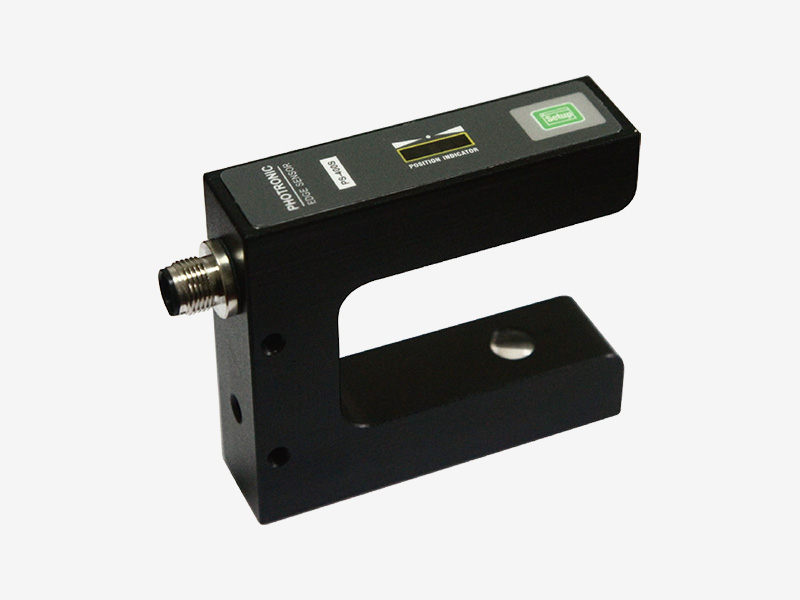
PS-400S
Visible-light photoelectric sensor for stable edge tracking on opaque and transparent film.
View Product Details
Visible-light photoelectric sensor for stable edge tracking on opaque and transparent film.
View Product Details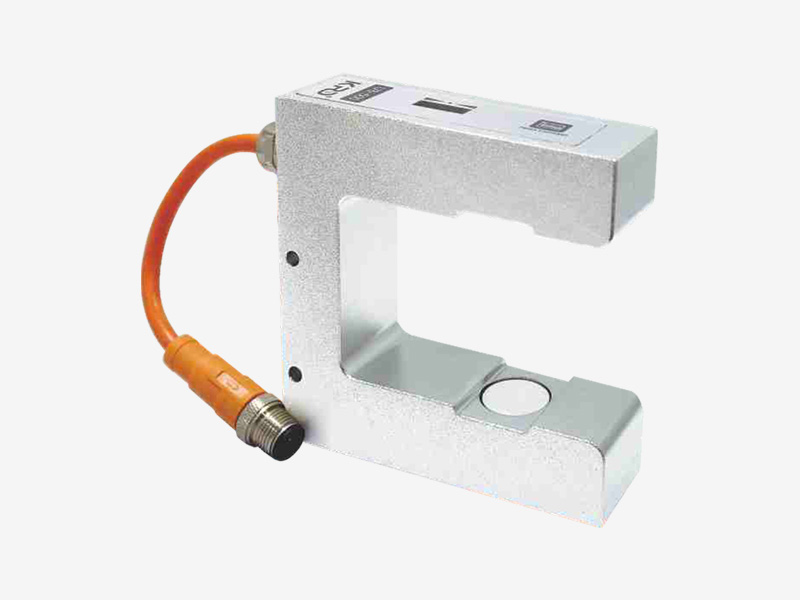
Ultrasonic sensor family for non-breathable materials, unaffected by transparency.
View Category
High-precision camera and color mark sensors for line, edge and registration detection.
View CategorySensor selection guide
Start with the guiding method, then check the material or detection target.
| Sensor model | Edge guiding | Centre guiding | Line / mark guiding |
|---|---|---|---|
| HCCD | ✓ | ✓ | ✓ |
| PS-260 / PS-261 | ✓ | ✓ | ✓ |
| US-400 / US-500 | ✓ | ✓ | |
| PS-400 / PS-500 | ✓ | ✓ |
| Material or target | HCCD | PS-260 / PS-261 | US-400 / US-500 | PS-400 / PS-500 |
|---|---|---|---|---|
| Transparent film | ✓ | ✓ | ✓ | ✓ |
| Opaque film | ✓ | ✓ | ✓ | ✓ |
| Paper / paperboard | ✓ | ✓ | ✓ | ✓ |
| Foil / metallized web | ✓ | ✓ | ✓ | ✓ |
| Metal sheet | ✓ | ✓ | ✓ | ✓ |
| Textile / woven web | ✓ | ✓ | ✓ | |
| Fabric / breathable web | ✓ | ✓ | ✓ | |
| Photosensitive film | ✓ | ✓ | ✓ | |
| Dust-prone environment | ✓ |
Engineering Selection
Before finalizing a product category, review how the component will be installed and how operators will use it during production. Industrial web handling equipment often runs different materials on the same machine, so the selected component must be stable across normal speed changes, startup conditions and material changeovers. For retrofit projects, panel space, mounting space, wiring distance and existing control logic can be just as important as the nominal product specification.
In a new OEM machine build, KRD recommends defining the control objective first: stable unwind tension, accurate process-zone tension, edge guiding before printing, center guiding before slitting, sensor replacement, actuator movement or integrated EPC correction. Once the objective is clear, the selection can be narrowed by web width, material type, required accuracy, line speed, available correction stroke and electrical interface.
When requesting a quote, include machine photos or drawings if available. Useful information includes material samples, web width range, maximum speed, roller diameter, desired correction location, current pain point and whether the machine uses PLC control. These details help KRD Automation recommend a product that fits the real production line instead of only matching a catalogue category.
Product selection should account for the full production environment, not only the catalogue name. Important factors include material behaviour, normal and peak line speed, machine vibration, available mounting space, operator adjustment habits and how often the line changes material. These details influence whether the best solution is a simple replacement component, a closed-loop control package, a sensor upgrade or a complete matched assembly.
In packaging, printing, film, foil and battery material production, small control errors can create waste quickly. A stable component choice should reduce startup scrap, improve repeatability between shifts and make troubleshooting easier for maintenance teams. KRD Automation can help review the application and recommend a practical path for new machine builds or retrofit projects.
For a reliable quotation, include the material type, web width range, operating speed, required accuracy, current machine layout and the reason for the upgrade. If the component will replace an existing part, include the current model number and photos of the installation area.
This information helps KRD confirm whether the selected category is the right starting point and whether the application needs a standard catalogue product, a matched control package or a customized mechanical configuration.
For engineering review, KRD recommends documenting the current machine issue, expected production improvement and any space or electrical limitations before final selection. This makes it easier to compare product options and avoid mismatches between catalogue specifications and real operating conditions on the production floor.